My Life, My Story – Collection of Veterans’ Stories
Little known VA Program, My Life, My Story, collected Veterans’ Stories to Help Health Care Professionals Better Remember Their Patients
By Rebecca Martin
What makes up the historical record of a country? Is it the black and white photos, the dates, the narration? All those things we study in high school? Or is it the stories of the people who lived through key periods in history?
How many of us think of The Diary of Anne Frank when we think of World War II? For me, it is the haunting poems by the British poet, Wilfred Owen, who wrote about his time at the front during World War I. He painted a picture that stuck with me long after World History class faded into a blur. His words “But the old man would not so, but slew his son, And half the seed of Europe, one by one” painting vignettes of the battlefield from the heart. Perhaps those who lived with wars that came to their shores had more stake in recording their stories than the soldiers the United States has sent across the globe. So many young men who came home and their silence became a tradition whether they were heralded as heroes or villains upon their return.
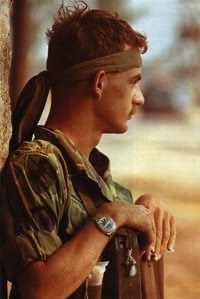
Gary Hunter serving his country in Vietnam.
The healing power of personal stories is well known and respected. There is a great comfort in knowing that one is not alone. For those who have suffered life changing or life-threatening trauma, the idea that they are not alone can be lifesaving as well. But what about the catharsis that comes from telling one’s own story? To put words to paper to make sense of what life laid out for them? To measure their own part on the battlefield and what that meant to the story of their lives?
Veterans’ Story Project Began in 2013
That is why the VA project, My Life, My Story, began in 2013. The Department of Veterans Affairs interviewed over 9000 veterans and wrote short stories, each under 1000 words, to add to the medical records of veterans. The hope was that the short stories could be easily read by medical personnel and add an understanding of who the people were they were treating. Each story was designed to tell each veteran’s personal story without the oversight of academia or skepticism. Just simple, honest recounts of the impact of war in people’s lives. And what happened afterwards. Did they do well? Did they come to terms with their experience?
The stories were limited to a thousand words to accommodate the readers, presumable medical staff, because summing up one’s life in 1000 words might seem impossible. But the honesty and personality of the stories remains surprisingly intact. Perhaps because, as a nation, these are the family stories we all share and we can hear the voices of our grandparents, parents, uncles and aunts, brothers and sisters, sons and daughters, and ourselves sprinkled through these stories.
Free Download of Veterans’ Stories
Fifteen of these stories are available to read, by consent of the authors, online at the Veterans Administration at https://dsva-vagov-prod-cms-files.s3.us-gov-west-1.amazonaws.com/2025-03/1%2C000%20Words%20For%20Web%20v2.pdf
This online booklet, titled 1000 Words: Stories from the VA’s My Life, My Story Project, is free to the public and is very worthwhile reading. Each story is unique, and in spite of the tough subject, inspiring. They bring a humanity to veterans that history books can’t. I think that in the U.S. many of us who have not served in the military get our perceptions of war from media such as movies. Because patriotism has always been a topic exploited to show very watered-down view of soldiers. But these are real people, with real lives, doing the best they can in what is sometimes nightmare conditions.
It’s not only the battlefield but life after coming home. And sometimes that is the bigger battle. The toll on families, careers and health is discussed openly. It made me sad that I didn’t know about this project because I know people who would have been proud to add their own stories.
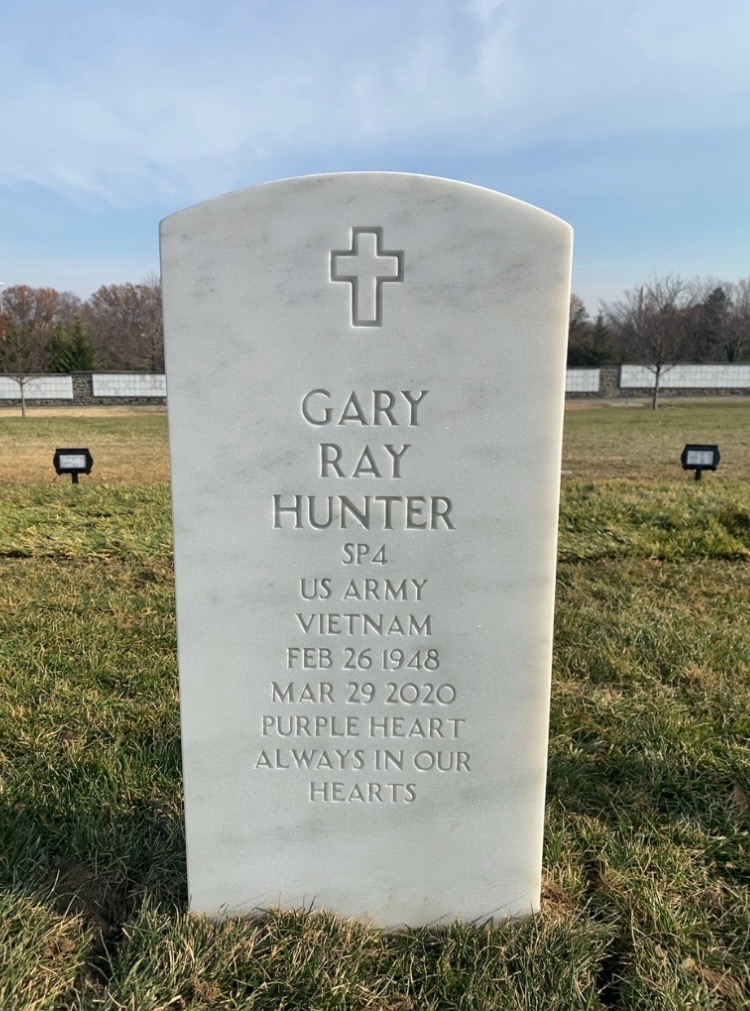
I particularly thought about one person who passed away a few years ago and is buried at Arlington National Cemetery. It was only in his later years that he spoke often about his two tours of duty in Vietnam. He was suffering from the deadly effects of exposure to Agent Orange. I wondered if those treating him knew of his heroics and the medals he was so proud of? At the very end of his life, the friends he made in Vietnam and his service to his country were the most important things in his life. To me, as an outsider, I wish I could have read his story. I wish it could have been preserved for posterity. The words on his tombstone are not enough.
That makes me worry about the future of this program. It was nonexistent before 2013, but it is invaluable since its inception. Preserving these records is important.
The stories themselves are written by volunteers in VA centers who have a My Life, My Story coordinator. To submit a story, the veteran must be enrolled in the VA Health Care system. Stories can be submitted, often over the phone through interviews. If you have questions on how to submit a story you can email to mystory@va.gov
You can also volunteer to collect the information for the My Life, My Story Program. You don’t have to be a professional writer but it helps if you have some writing and medical experience. Listening skills are important and the veteran interviews usually take around four hours to complete. To apply, contact the Voluntary Services office at your local VA facility to inquire if they offer the program.
If they don’t offer the program, there are many training materials available, including toolkits and videos about how to start the program in your area. Help is available by contacting mystory@va.gov
There are also many additional resources available at https://www.va.gov/wholehealth/mylifemystory/
These include newspaper stories, podcast episodes and more information related to the benefit these collected stories have towards building patient centered healthcare.
Once the stories are recorded, copies are given to the veterans and their family as a precious record of the role they played in America’s story. A piece of living history to be passed on to future generations. I think that may be a gift worth giving.
Editor’s Note: Why is this content for our carbon monoxide blog? Before we were carbon monoxide lawyers, we were brain injury lawyers. It is the brain injury part of the disability from CO poisoning that made this is a niche that we gravitated to 15 years ago. Since 1996, our firm has been at the forefront of brain damage information and cornerstone to that has been the stories of those survivors. It began with waiting.com and then we devoted an entire year to the TBI Voices project. Those stories can be found here. To access each story you must go to the pull down menu for each survivor’s first name. 
We originally had each story with it a standalone URL but there was so much content that Google, in its eminent wisdom, labeled it all spam. All the videos of those stories are still on Youtube linked from each story. Our entire Youtube channel can be round here: https://www.youtube.com/@TBIVoices/videos
Thanks to my childhood friend Dean Krahn, M.D. for bringing this work to my attention and to his lifetime of service to our veterans. One last link of an essay I did in 2013 on the Nightmare of a Combat Brain Injury: https://veteransbraininjury.com/nightmare-of-a-combat-brain-injury/
Leave a Reply
Want to join the discussion?Feel free to contribute!