
Only Carbon Monoxide Detection Alarms Can Prevent Harm
Carbon monoxide detection is essential to prevent death and disability from carbon monoxide poisoning before it is too late.
It is said that prevention is the only cure for brain damage. Prevention would seem such an easy challenge to prevent carbon monoxide poisoning through detection–especially since combination smoke and CO alarms are now readily available. Yet, despite increasing mandates for alarms, CO alarms remain an imperfect solution.
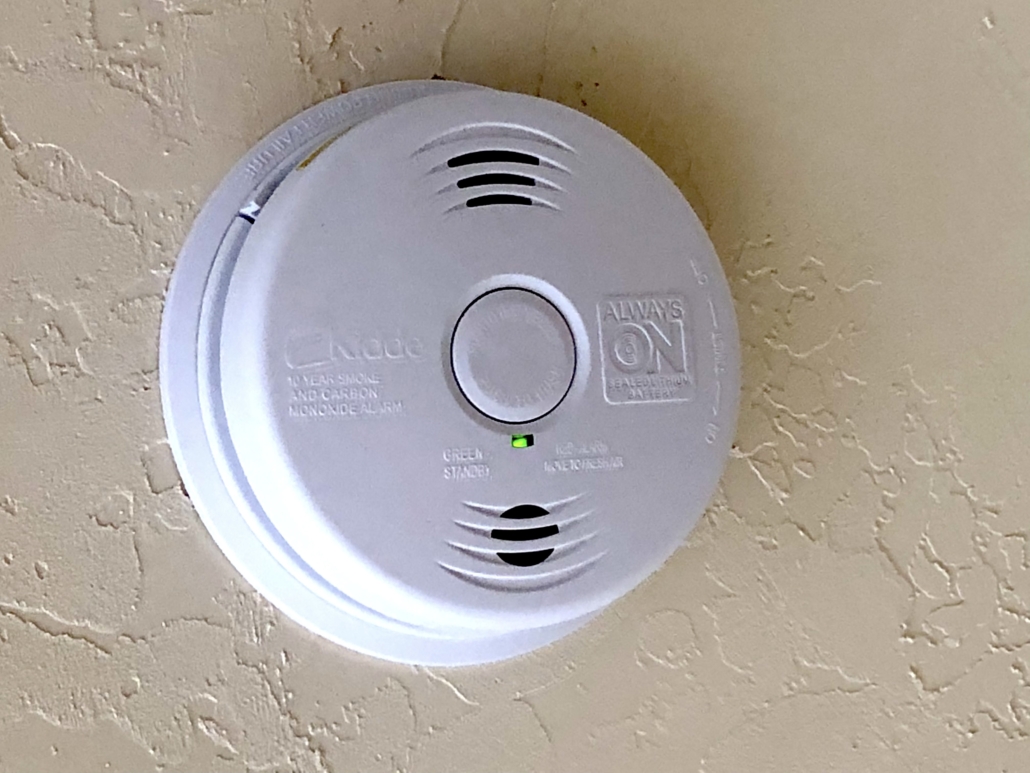
Carbon monoxide detection requires CO alarms in all indoor spaces. The simple solution is 10 year battery, combination smoke and carbon monoxide alarms.
The first problem is that CO alarms are still not required everywhere where fuel burning appliances and engines are operated. Too often, CO alarm requirements are a reaction to a particularly newsworthy tragedy. For example:
In September of 2014, a school poisoning in central Illinois occurred, with an entire middle school of children and their teachers poisoned. This galvanized a movement to get CO detectors in all Illinois schools. The effective date was January 1, 2016.
On October 30, 2015, a comparable poisoning occurred in a Chicago public grade school. No CO detectors were in place because the law hadn’t taken effect yet. The attendant publicity to the lawsuit got the Chicago Board of Education to take steps just in time.
In December of 2015, there was another school poisoning in Chicago. But this time, the students were evacuated. The reason–in the interim between the November poisoning and the December poisoning–the school installed CO detectors. Installing those alarms was a result of this author filing a lawsuit.
The lawsuit saved that third school full of children from a more serious poisoning.
As of this writing, not all states have CO alarm requirements. More than half of the states don’t require them in schools.[1] Only a handful of states require them in office buildings. Too many states only require them in single-family, owner-occupied residences with new construction.
The second problem with a prevention strategy focused solely on detectors is that these laws don’t always require detectors in the right places. Detectors in designated places within hotels have been required for longer periods of time because of the obvious increased risk factors that come with carbon monoxide in a place where people sleep. However, most of those detector laws only require a detector in the place that the fuel burning appliances are, not in the rooms themselves. This clearly demonstrates inadequacy, as CO can migrate to hotel rooms without necessarily triggering the alarm. Having only one detector in a hotel does not necessarily give a warning unless the detector is connected to the central alarm in the hotel.
Picture the typical road warrior hotel after 10 p.m. I am often checking in to such places at such hours. Invariably, there is only one person at work in the hotel. Keep in mind that overnight is one of the highest risk periods in a hotel.
First, those are the hours that people are sleeping and second, because it gets coldest in the middle of the night and early morning hours. Now also picture that the central heating units in a hotel may be located inside concrete block rooms that are almost bunkers. Many times, these equipment rooms are distant from the front desk and may even be in basements. We can imagine a situation where that alarm is going off all night long, and no one hears it until the maintenance man comes in the next day.
In order for Carbon Monoxide Detection to do its Job, Alarms Must be Where the people are.
- Alarms must warn of the hazard where people are breathing.
- The alarm must be heard by people’s ears.
Battery Life Should No Longer be a Problem with Carbon Monoxide Detection
Another major problem with alarms is their dependency on batteries. One doesn’t have to search long for the tragedy of an apartment fire, where people died because someone didn’t replace the batteries when the alarm started chirping[2], and simply disconnected the alarm. That is no less a danger with CO alarms than smoke detectors. It is less likely to make the news because only mass poisonings and CO death cases make the news.
There is an existing solution to the battery replacement. The major alarm companies are now making combination smoke and CO alarms that have ten-year batteries. That solves the battery replacement problem and takes care of one of the biggest nuisances in home ownership and management–having to replace batteries twice a year. I wonder why the detector companies continue to make alarms with replaceable batteries?
Next CO Alarms must be Better
[1] For excellent resource on schools, see https://www.carbonmonoxideinschools.org
[2] Chirping is a sound alarms make when the batteries need to be replaced.