
Three Perish from Carbon Monoxide in Van
Three disabled adults perish from carbon monoxide poisoning in a van left in a garage with engine running.
By Rebecca Martin
Disabled adults are protected by guidelines put forth by the Americans with Disabilities Act. Disabled people can include those who would be considered vulnerable individuals. These guidelines cover many issues with accessibility and outline the accommodation of disabled persons on transport; public or private. These rules are meant to increase the mobility of those who are disabled as well as guarantee their access to services such as medical care, learning facilities or programs tailored to their specific needs.
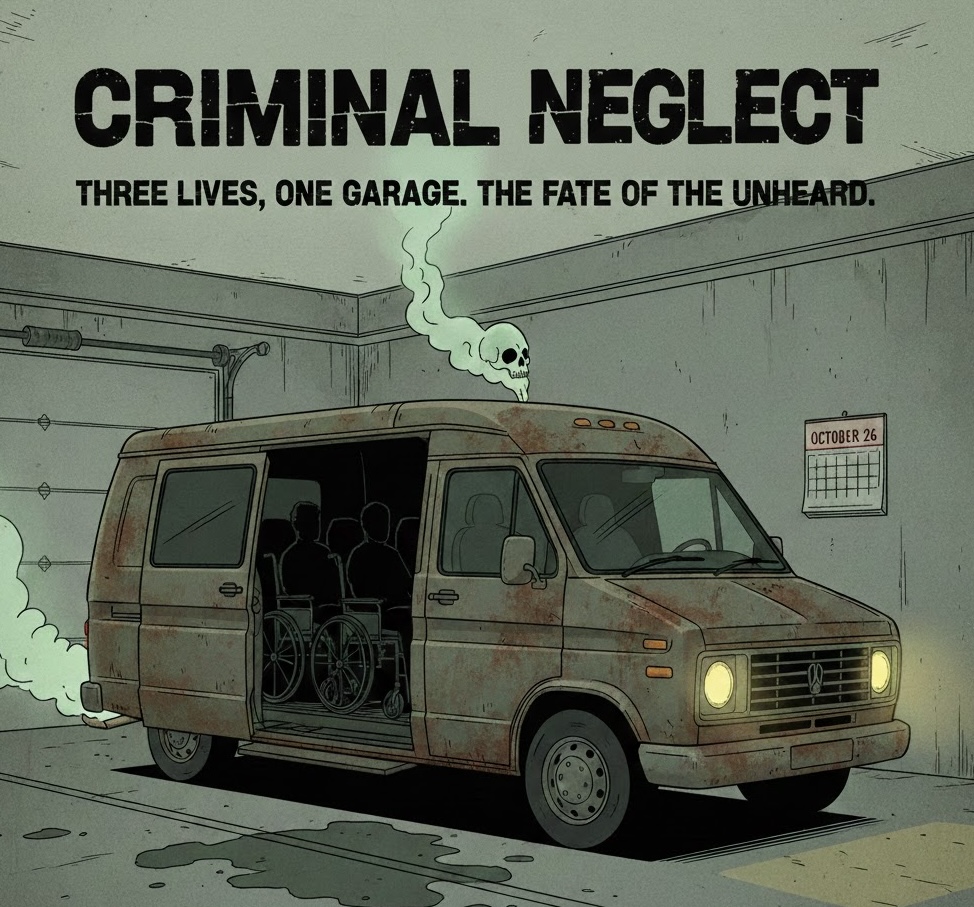
What kind of training does a median driver have when he parked his car in his homes garage with he engine running long enough for three disabled adults to perish from carbon monoxide poisoning?
These government guidelines exist to protect the vulnerable from harm. That is why it is inconceivable that a Utah man, 25-year-pld Isaiah Pulu, has been charged with three counts of manslaughter and three counts of aggravated abuse of a vulnerable adult following the deaths of three of his passengers on Friday, February 6.
General ADA requirements specify that those employed to transport disabled individuals should be properly trained operators and personnel. There is also a general description of transportation provider responsibilities that states that drivers do not leave their passengers unattended or out of sight for a “lengthy period of time”. If the passengers are unable to exit on their own, the driver should remain with the passengers under their care, and the vehicle should be monitored for security and safety.
The safety requirements for passengers are further expanded upon by the NEMT (Non-Emergency Medical Transportation), guidelines which state that “individuals with disabilities should not be left unattended in vehicles if it poses a safety risk, such as extreme heat or cold, or if they are unable to exit safely on their own.”
ADA guidelines are part of federal civil rights law. NEMT generally falls under the CFHS (Cabinet for Health and Family Services) and receives funding from the FTA (Federal Transit Administration) for one. Funding is coordinated through CCAM (Coordinating Council on Access and Mobility which is an interagency group which focuses on federal programs for funding and expertise to facilitate human services transportation. CCAM is made of member groups such as the VA (Veterans Administration), serving veterans, the HHS (Health and Human Services), and the CMS (Centers for Medicare and Medicaid Services) providing services for Medicare and Medicaid recipients.
Medical transport is thus monitored and funded by a wide range of government agencies who have been very clear on the principles of general safety in the non-emergency medical transport industry.
How could Three Medican Passengers Perish from Carbon Monoxide Poisoning?
How is it then that Colton Moser, 25, Mosa’ati Moa, 22, and Tim Jones, 39, lost their lives on Friday the 6th? All three men were traveling back to three separate assisted living facilities. As disabled persons they would have been advised clearly about travel plans, including pickup and drop off and reasonably expecting that their trip would be uneventful and in line with other trips they had taken.
So, when Isaiah Pulu pulled the van into his home’s garage rather than continuing to his assigned stops, there must have been some confusion.
In general, the federal law has some acknowledgement that neglect on the driver’s part would be consistent with the three men left unattended and cross over into endangerment if health and weather conditions would warrant better judgement, and cross over into endangerment depending on the length of time the men were left unattended. The admonishment to “look before you leave” would have been irrelevant in this case.
Isaiah Pulu didn’t just drop by his house. He said he left the van running, he left the garage door open, and then he went into his home for 1-2 hours, where he reportedly had lunch and watched TV. His passengers, two of which were described as non-verbal were left in the vehicle with the third passenger who Pulu said, “would not calm down and was being disruptive”. https://people.com/3-men-with-disabilities-died-carbon-monoxide-poisoning-after-driver-allegedly-left-them-in-running-vehicle-11902317#:~:text=A%20Utah%20man%20has%20been,die%20from%20carbon%20monoxide%20poisoning.
His account continues as he describes returning to the van after his unscheduled lunch break and observed that the garage door was closed and the van was no longer running and was at that time unable to be restarted. All three of his passengers were dead. We have to wonder if his account means he did not check on his passengers upon returning to the vehicle immediately but merely hopped in and attempted to start the van to continue his assignment.
Some states have enacted laws directed at this type of neglect. In Ohio, it is illegal to leave a physically or mentally handicapped person unattended in a motor vehicle if it creates a risk to their health, safety or welfare, especially if the keys are in the ignition or the engine is running. In Kentucky, it is illegal to leave any vehicle standing unattended while the keys are in the ignition or the engine is running…and that is a law I am familiar with because you absolutely cannot leave a car in your driveway, even if it’s covered in ice and you want to step inside to warm up while it defrosts or want to charge your phone during a power outage. The laws are quite clear that there are no exceptions.
There are many additional ways to guarantee things like this do not occur. Protocols can be adopted that require automated or manual check-ins that are carefully monitored to make sure schedules are kept, which would have been able to catch a 1–2-hour delay in the schedule. Look before you leave protocols that require accountability on the part of drivers to make sure passengers are loaded on time and dropped off on time and always accounted for. And of course, strict vetting, adequate training and regular retraining. Certification programs should be an industry standard.
Teaching Combustion Sense
Knowing carbon monoxide safety could have saved lives here. Whether the garage door was open or closed, a basic education in carbon monoxide dangers would have made the driver aware that did not matter. The passengers were in just as much danger either way.
I think the disturbing part is that this might just be the one time he got caught. We are entrusting some of the most vulnerable people to the inadequate care of strangers. We have the expectation that they have adequate training and knowledge to provide this service. How many Isaiahs are doing the same thing and because no one has died, no one is the wiser. It is hundreds of times more likely for a person to suffer an injury from carbon monoxide poisoning in situations where a vehicle is left running for an amount of time in an enclosed space or in adverse weather conditions.
It is up to the employer in this situation to do their best to make sure these types of incidents never occur. In this case, Safe and Sounds Services, LLC has been issued a NEAA (Notice of Emergency Agency Action) which suspends their services for 30 days pending an investigation. The DLBC (Division of Licensing and Background Checks) will be conducting the investigation. Meanwhile Pulu is being held at the Salt Lake County Jail without bail.
Leave a Reply
Want to join the discussion?Feel free to contribute!